
Impact Report 2026
Unlocking Europe's Deep Tech Sovereignty
A decade of public capital put to work behind the companies building Europe's industrial future
Prepared for founders, private investors and European institutions.
All figures as reported at 6 August 2026.
About Zaz Ventures
Zaz Ventures is a pan-European fundraising partner securing public and private funding for deep tech founders across quantum, chips, biotech, cleantech, energy, and space.
We support every European Innovation Council instrument, conducting the majority of our engagements purely on a no-win, no-pay basis.
A decade of fundraising support for European deep tech founders
Public funding raised with our support in the past decade
EIC laureates supported by us since 2021
Combined enterprise value of our clients
Portfolio companies at unicorn scale
European deep tech in 2025
Combined enterprise value of Europe's VC-backed deep tech companies, up from €65bn a decade ago
Invested in European deep tech in 2025, a record 32% of all European venture capital
Investment decrease from 2021 peak, against -54% for the broader European tech market
Of all EU quantum funding now involves EIC-backed companies
Private capital mobilised for every euro invested by the EIC Fund
Equity rounds > €100M raised in 2025 by EIC-backed companies, including 6 of our clients
Foreword
Unlocking Europe's deep tech sovereignty
Europe hosts roughly 45% of the world's deep tech startups and captures 17% of global funding. Closing that gap is our mission.
In an era where deep tech defines global leadership, Europe's technological sovereignty hinges on a single, critical imperative: our ability to scale breakthrough companies. The geopolitical battlegrounds of the 21st century are being drawn around quantum computing, artificial intelligence, synthetic biology, fusion energy, and the like.
For years, Europe has been an undisputed powerhouse in frontier research; today, the continent hosts roughly 45% of the world's deep tech startups, yet captures only 17% of global funding.1 This systemic scaling bottleneck, evidenced by a European Series A-to-Series B conversion rate of just 10%, compared to North America's 24%,2 has historically forced our most promising innovators to look across the Atlantic for growth capital.
As recent analyses on European deep tech ecosystems emphasise, scaling frontier physical technologies requires that scientific breakthroughs and their supporting capital ecosystems co-develop seamlessly across every phase, from early lab validation to full-scale industrial deployment.3
At Zaz Ventures, we have made it our mission to close this gap. We have supported over 200 EIC-funded companies across various funding instruments. We have seen firsthand how targeted public capital de-risks revolutionary science, catalyses private venture capital, and builds category-defining champions.
Deep tech requires patience, perseverance, and long-term conviction; it often takes five to ten years to mature science, protect intellectual property, industrialise, and win market trust. A case in point: when quantum computing was still viewed largely as an academic domain, we encouraged companies like Pasqal and IQM to apply to the EIC Accelerator, not merely to secure grants, but because we believed early in their potential to become industrial leaders.
Unicorn status is not the end goal; it is a visible sign that years of technological excellence have translated into real economic and industrial value. Public funding is far more than a simple catalyst; it is the foundational engine that de-risks deep tech, crowds in private growth capital, enables industrial manufacturing capacity, generates sustainable revenues, and secures long-term technological sovereignty.
When deep tech companies require major capital to build factories and dominate global markets, the European capital ecosystem must answer across every stage of growth. The European Commission's expanding scale-up architecture is the crucial piece of this puzzle. Together, the EIC STEP Scale Up programme and the Scale-Up Europe Fund establish a continuous funding pipeline for late-stage expansion, ensuring high-growth companies nurtured by Horizon Europe and the EIC no longer need to relocate outside Europe to fulfil their potential.
We stand at a profound inflection point. Europe possesses the scientific talent, the visionary founders, and increasingly the bold capital required to forge a new industrial era. Yet true competitiveness depends not just on deploying today's solutions, but on creating tomorrow's breakthroughs. The next Multiannual Financial Framework (MFF) must reflect this reality by committing an ambitious budget to FP10 and fiercely safeguarding our core innovation capacity. Underinvesting in the ideas, talent, and technologies that will define our future is a mistake Europe simply cannot afford.
The Macro-Economic Landscape
European deep tech in 2025-2026
A hostile macro-environment, and yet deep tech outperformed the broader European technology ecosystem on every meaningful measure.
European deep tech entered 2025 with a paradox to resolve. The macro-environment was unfavourable: high interest rates, valuation resets, contracting LP commitments to venture, and a generalist VC market that had been retreating from hardware since 2022. Yet by year-end, deep tech had outperformed the broader European technology ecosystem on every meaningful measure. Capital deployed grew. Late-stage rounds closed. Industrial scale-up announcements multiplied.
Resilience in a volatile world
The investment climate of 2025 was defined by a bifurcation in the venture capital markets. While traditional SaaS and consumer tech funding continued to face headwinds, deep tech emerged as a stabilising force, attracting €18 billion in 2025 and capturing a record 32% of all European venture capital, more than double its share a decade ago.1 The divergence is stark: deep tech closed the year just 4% below its 2021 peak, while the broader European tech market remained 54% below.1 This is a structural shift, indicating that investors are increasingly prioritising tangible, IP-rich assets over quick-flip digital models.
The cumulative effect is an asset class of real scale. Europe's venture-backed deep tech companies are now worth €610 billion, up from €65 billion a decade ago,1 within a broader European tech ecosystem valued at nearly €3.5 trillion, representing 15% of Europe's GDP and a workforce of 3.5 million.4 This growth is not accidental; it is the result of a decade of deliberate policy and ecosystem building. However, the "growth gap" remains Europe's most persistent structural weakness. While early-stage funding (Seed and Series A) is robust, the scaling phase remains constrained: roughly 70% of late-stage capital now originates from outside the continent.1 The exit environment compounds the problem, with more than 80% of exits driven by M&A and much of the value captured by US acquirers.1 This dependency on foreign capital poses a risk to strategic autonomy, as promising European companies may be forced to relocate or exit prematurely to secure necessary liquidity.
The Atomico State of European Tech 2025 report highlights a "confidence crisis" as a major challenge, despite the objective strengths of the ecosystem.5 There is a lingering perception gap between the reality of Europe's technological prowess and the narrative often dominated by the US and China. The data, however, tells a different story. For example, Europe is leading in Quantum hardware and Physical AI, the embedding of intelligence into robotics, materials and energy systems, rather than merely competing in the crowded Large Language Model space.5 This aligns with our thesis, which prioritises hardware-enabled innovation over purely digital plays.
The European scaling gap
Share of the world's deep tech startups vs. share of global funding captured
Series A-to-Series B conversion rate
Bars scaled within each panel. Europe converts Series A rounds into Series B at 42% of the North American rate — the single clearest expression of the growth gap.
2025: The year the policy architecture arrived
Industrial sovereignty has been the stated ambition since the Chips Act of 2022. What distinguished 2025 was the shift from ambition to funding instrument: six Commission decisions in seven months that together redraw the funding landscape our clients will navigate through to 2034.
The through-line matters more than any single measure. Across all six, the Commission has accepted the diagnosis that Europe's weakness is not invention but scaling, and has begun building funding instruments sized accordingly. The companies positioned to benefit are those already inside the EIC pipeline when the larger instruments arrive.
EC policies published in 2025
Competitiveness Compass
The Commission's answer to the Draghi report named the innovation gap as Europe's central weakness. "Strategic technologies" became a budget line.6
Startup and Scaleup Strategy
26 measures: an expanded, ARPA-style EIC and a proposed "28th regime" letting a company incorporate once and trade across the Single Market.7
Defence Readiness Omnibus
€800Bn over four years. Ten instruments amended, and the clarification that sustainable finance rules do not restrict defence — opening dual-use to EIC funding.8
Quantum Europe Strategy
Global quantum leadership by 2030 across research, infrastructure, industrialisation and skills, with a European Quantum Act to follow.9
Life Sciences Strategy
More than €10Bn a year across Horizon Europe, EU4Health and Digital Europe, plus a Biotech Act to harmonise approval timelines.10
Horizon Europe, doubled
€95.5Bn to €175Bn for 2028–2034, with a €234Bn Competitiveness Fund alongside — €409Bn together, 21% of the proposed budget. Still a proposal.11
Deep tech unicorns are all value-generating companies
The 2025 cohort of deep tech unicorns differs qualitatively from the general tech cohort: research indicates that 100% of deep tech startups reaching unicorn status are value-generating, against 89% for general tech.2 The evidence from the EIC portfolio points the same way. Three EIC-backed companies crossed unicorn valuations during the year, nine more sit above €500 million, and nearly 120 above €100 million.12 These are not momentum valuations; they are companies with order books, factories and regulatory approvals.
Successful deep tech champions are defined by visionary leadership, robust IP, clear technical roadmaps, and strong market alignment. Because they require years of R&D and significant capital expenditure, they rely on resilient fundraising strategies to build durable competitive moats. Leaders like Skeleton and IQM illustrate this perfectly: by building gigafactories and quantum production lines, they have created the hard-to-replicate physical assets that define deep tech's core strength today, and attract investors. Across 2025, European deep tech finished just 4% below its 2021 peak while the broader tech market remained 54% below.1
Europe's new deep tech champions
Skeleton Technologies
Advising Since 2015
Valuation on the Siemens-led round of October 2026. Our longest engagement, from the €2.5M SME Instrument grant in 2015 to the €79.2M Innovation Fund award for SB-VARKAUS.
Pasqal
Advising Since 2019
Pre-money valuation cleared by the SEC ahead of its Nasdaq listing as PSQL. Five funding instruments secured, from a €2.5M grant to €30M of STEP Scale-Up equity.
IQM
Advising Since 2019
Valuation at its July 2026 Nasdaq listing under IQMX, the first for a European quantum company. Four funding instruments totalling €62.5M since 2020.
Multiverse Computing
Advising Since 2021
Valuation on a recent €500M raise, built on €12.5M of EIC Accelerator and €30M of STEP Scale-Up funding. Spain's fastest-growing deep tech company.
Axelera AI
Advising Since 2022
Series C closed in February 2026, the largest investment ever made in an EU AI semiconductor company. Blended EIC Accelerator grant and equity secured in 2024.
Proxima Fusion
Advising Since 2023
Valuation on the €411M round that took total capital past €650M, catalysed by the €2.5M grant and €15M EIC Fund equity we secured.
Portfolio Impact
Portfolio Public Funding Impact: Featured Cases
The measure of portfolio impact is not the volume of capital secured but the technologies it puts into the field. These cases highlight the European Commission's role in providing critical early-stage backing ahead of the private market.
Europe's quantum decade
Europe holds a historical academic advantage in quantum physics, and EIC funding instruments are the primary engine translating that advantage into industrial capacity. Zaz Ventures has secured public funding for leaders in every major qubit modality, hedging Europe's position across superconducting, neutral-atom and photonic architectures. Two of the three companies below have now reached public markets or are days from doing so.
The silicon shield
Supply chain friction and geopolitical realignment have made sovereignty in microprocessors and AI hardware an economic mandate rather than an aspiration. Zaz Ventures has secured non-dilutive capital and public growth equity for the companies building Europe's silicon base. Two of the three below were selected under the EIC STEP Scale-Up call in July 2026.
Industrialising sustainability
Net zero requires physical infrastructure: renewable structures, high-power storage and novel baseload generation. These are the hardest assets to finance privately and the clearest case for public funding instruments. Zaz Ventures supports the capital-intensive scale-ups building them, increasingly through the Innovation Fund as well as the EIC.
Connecting and monitoring the planet
Sovereign access to space, autonomous freight and independent Earth observation depend on advances in propulsion, platform reliability and sensing. Two of the three companies below moved into dual-use and defence applications during 2026, tracking the reorientation of European policy.
The convergence of tech and biology
This portfolio is built on physical precision inside the body rather than software around it: graphene electrodes at the cortical surface, peptides that rupture bacterial membranes, robots that navigate curved paths through brain tissue. These are hardware problems before they are biology problems, which is what makes them slow to build, expensive to validate, and hard to displace once proven.
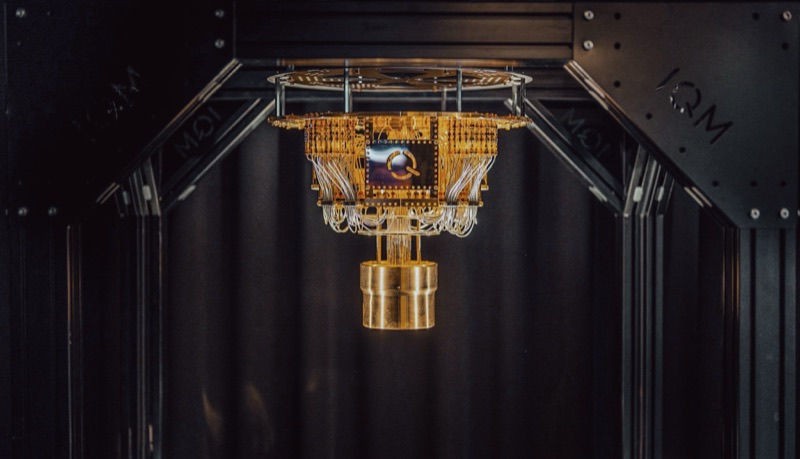 Quantum Computing
 The superconducting leaderFinlandRead case
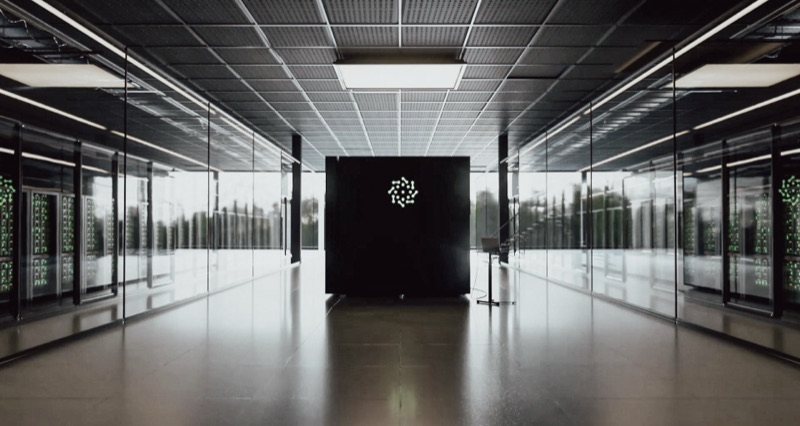 Quantum Computing
 The neutral-atom championFranceRead case
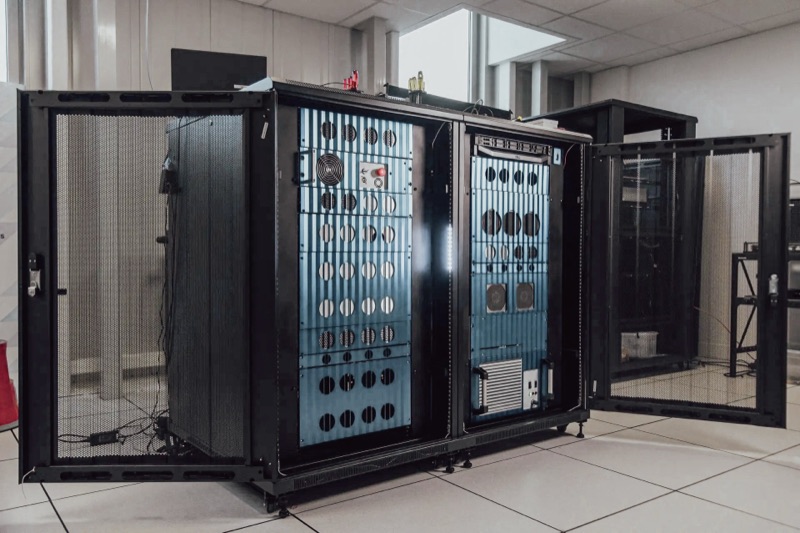 Quantum Computing
 The photonic pioneerFranceRead case
 Semiconductors & AI Hardware
 The sovereign brain of EuropeFranceRead case
 Semiconductors & AI Hardware
 Democratising edge AINetherlandsRead case
 Semiconductors & AI Hardware
 The generative AI engineFranceRead case
 Energy & Cleantech
 Reimagining wind energySwedenRead case
 Energy & Cleantech
 Powering the AI boomEstoniaRead case
 Energy & Cleantech
 The stellarator's industrial edgeGermanyRead case
 Space & Aerospace
 Revolutionising space mobilityFranceRead case
 Space & Aerospace
 The cargo drone airlineBulgariaRead case
 Space & Aerospace
 The thermometer of the EarthGermanyRead case
 Health & Biotech
 Decoding the brainSpainRead case
 Health & Biotech
 Nature's answer to superbugsIsraelRead case
 Health & Biotech
 Navigating the human brainFranceRead case
Quantum Computing
- Country
- Finland
- Leadership
- CEO Dr. Jan Goetz
- Website
- IQM.TECH
The superconducting leader
IQM has moved from laboratory validation to assembly-line industrialisation faster than any European quantum company. Its Espoo facility produces up to 20 full-stack quantum computers a year and houses Europe's only private quantum chip factory.13
On 2 July 2026, IQM became the first European quantum computing company to list on a major US exchange, trading on Nasdaq under IQMX following its merger with Real Asset Acquisition Corp at a valuation of approximately $2 billion. IQM published in August 2026 its first results as a public company: 26 systems sold, an order backlog above €102 million, and H1 2026 revenue of €8.9 million at 46% gross margin.
Our mandate
Zaz Ventures supported IQM across four instruments totalling €62.5 million. We structured the application for the EIC Accelerator (Pilot) Grant received in 2020 (€2.5 million), which financed qubit-coupler design and high-fidelity 3D packaging, followed by the EIC Accelerator (Pilot) Equity received in 2022 (€15 million), which matched private co-investors in the Series A. We then secured a second award combining EIC Accelerator Equity (€15 million) and EIC STEP Scale-Up Equity (€30 million), both received in 2025, financing cleanroom fabrication capacity in Espoo, manufacturing methods for larger error-corrected processors, and global data-centre assembly infrastructure ahead of the Nasdaq listing.

Quantum Computing
- Country
- France
- Leadership
- CEO Dr. Wasiq Bokhari
- Website
- PASQAL.COM
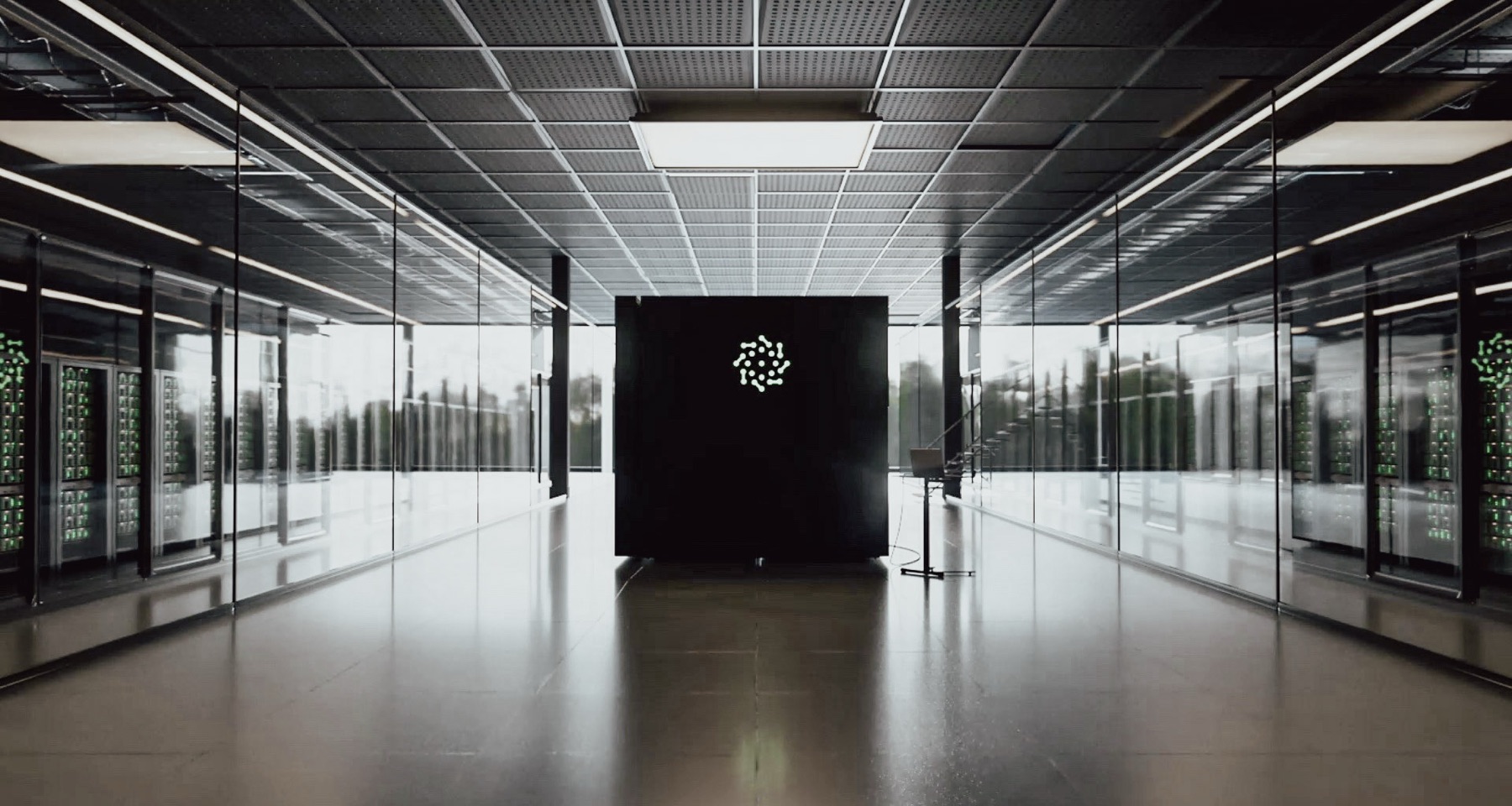
The neutral-atom champion
Pasqal has validated the commercial viability of neutral-atom computing, operating one of the largest installed bases of high-qubit-count systems among pure-play quantum companies. It has trapped over 1,000 physical qubits against a roadmap targeting 10,000 physical and 200 logical qubits, generated €16.5 million of commercial revenue in 2025, and holds over €66 million in booked and awarded contracts.15
Recent milestones include the Middle East's first industrial quantum computer with Saudi Aramco,14 Italy's first neutral-atom system at CINECA, and a demonstration of quantum advantage in materials simulation with Los Alamos National Laboratory. Its merger with Bleichroeder Acquisition Corp. II at a $2.0 billion pre-money valuation cleared the SEC on 5 August 2026; shareholders vote on 25 August 2026, after which the company will trade on Nasdaq as PSQL, with a Euronext listing to follow.
Our mandate
Zaz Ventures designed a five-instrument public capital strategy for Pasqal, the broadest in the portfolio. We secured the EIC Accelerator (Pilot) Grant received in 2021 (€2.5 million) and structured participation in the Horizon Europe collaborative project EQUALITY, started in 2022 (€6 million), to strengthen Europe's quantum software ecosystem. We then secured the EIC Accelerator (Pilot) Equity received in 2023 (€19.5 million), an EIC Pathfinder Grant received in 2024 funding fundamental research at the frontier of the roadmap, and EIC STEP Scale-Up Equity received in 2026 (€30 million). This capital industrialised full-stack processor production across two manufacturing sites and funded cloud and on-premise system deliveries worldwide.
Quantum Computing
- Country
- France
- Leadership
- CEO Niccolò Somaschi
- Website
- QUANDELA.COM
The photonic pioneer
Quandela is advancing optical quantum computing through single-photon sources and integrated photonic circuits. It launched MerLin, its open-source quantum machine learning framework, achieving 20,000-fold acceleration via NVIDIA CUDA-Q integration, and OVHcloud has integrated its 12-qubit Belenos processor into a sovereign cloud platform.16
After demonstrating a 100,000-fold reduction in the optical components required for fault-tolerant computation,17 Quandela delivered Lucy to EuroHPC and GENCI at the CEA's TGCC facility.18 In June 2026 it validated a low-latency path between its photonic processors and NVIDIA infrastructure via NVQLink, and strengthened its leadership with a new chief operating officer and chairman as it moves into industrialisation.
Our mandate
Zaz Ventures secured funding for Quandela across four funding instruments covering both product development and public procurement. We supported the EIC Accelerator Grant (€2.5 million) and EIC Accelerator Equity (€7.3 million), both received in 2023, which industrialised modular single-photon emitters and built cloud-accessible photonic processors. We then supported the winning bid for a EuroHPC tender received in 2024, placing Quandela hardware inside European supercomputing centres, and have supported a successful EIC STEP Scale-Up Equity application in 2025.

Semiconductors & AI Hardware
- Country
- France
- Leadership
- CEO Philippe Notton
- Website
- SIPEARL.COM
The sovereign brain of Europe
SiPearl designs high-performance, energy-efficient processors for Europe's exascale supercomputers and sovereign data centres. Rhea1 carries 80 Arm Neoverse V1 cores and more than 61 billion transistors, making it the most complex server CPU ever designed in Europe.
Following tape-out at TSMC, SiPearl powered on the first Rhea1 in May and its general availability is scheduled for the end of 2026. Rhea1 will equip JUPITER, Europe's first exascale supercomputer, where Jülich plans to install over 2,600 processors across more than 1,300 nodes, as well as France's Alice Recoque system.
Our mandate
Zaz Ventures secured the public capital that de-risked Rhea1 before private investors would commit, and is now supporting the company's scale-up round. We structured the applications for the EIC Accelerator Grant (€2.5 million) and EIC Accelerator Equity (€15 million), both received in 2022. This financed architecture design, pre-silicon verification and the physical tape-out with TSMC, creating the validation that anchored the €130 million Series A. We supported their successful EIC STEP Scale-Up Equity application in 2026, which will fund the transition from first silicon to volume supply.

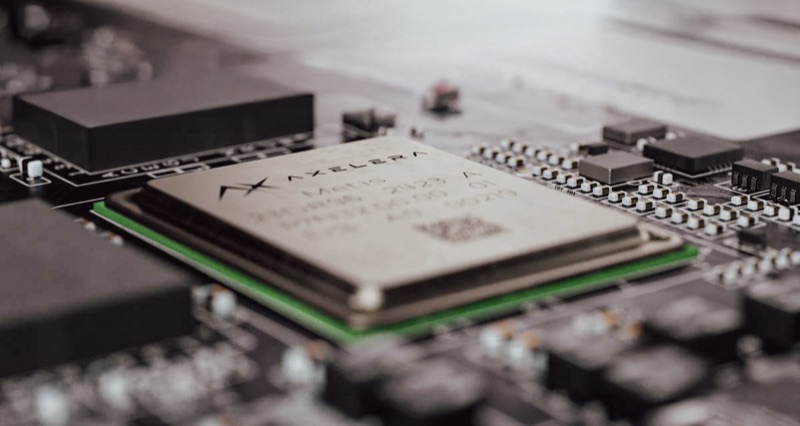
Semiconductors & AI Hardware
- Country
- Netherlands
- Leadership
- CEO Fabrizio Del Maffeo
- Website
- AXELERA.AI
Democratising edge AI
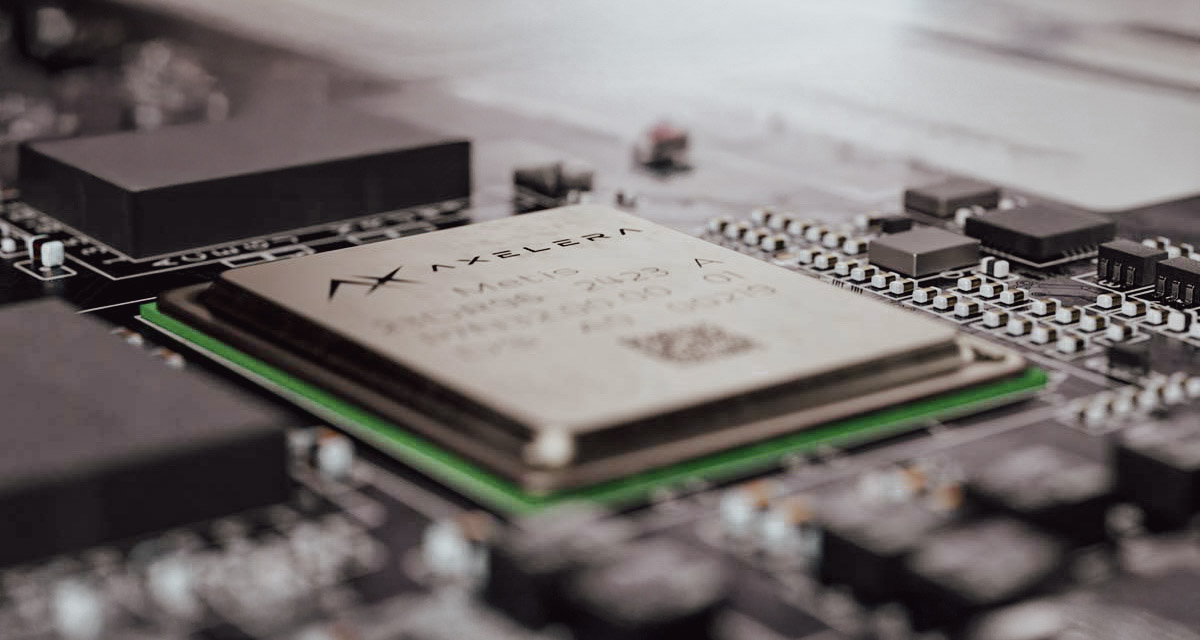
Axelera AI builds high-throughput, energy-efficient inference hardware for edge devices and enterprise compute. In February 2026 it closed a Series C of more than $250 million (€211 million) led by Innovation Industries, with BlackRock joining alongside the EIC Fund and Samsung Catalyst Fund.
It is the largest investment ever made in an EU AI semiconductor company and lifts total funding above $450 million. The round coincided with shipment to the company's 500th customer, having more than tripled its customer base in a year. Axelera also secured up to €61.6 million from the EuroHPC Joint Undertaking to develop Titania, a scalable AI chiplet, and manufactures through TSMC and Samsung.
Our mandate
Zaz Ventures secured Axelera AI's blended EIC package at the point where its architecture was proven but its commercial record was not. We supported the EIC Accelerator Grant (€2.5 million) and EIC Accelerator Equity (€15 million), both received in 2024. The capital accelerated commercial scale-up of the Metis inference platform, completed software stack and SDK optimisation, and expanded deployment networks, establishing the customer traction that underwrote the €211 million Series C.
Semiconductors & AI Hardware
- Country
- France
- Leadership
- CEO Khaled Maalej
- Website
- VSORA.COM
The generative AI engine
Vsora designs unified architectures for generative AI inference and autonomous driving. Its Jotunn8 processor, built on TSMC's 5nm node with CoWoS packaging, delivers 3,200 Tflops with 288GB of HBM3e, addressing the memory wall that leaves conventional accelerators idle.
Tape-out completed in October 2025 and the chip entered manufacturing, with development boards and servers following. In July 2026 Vsora closed a further round led by Ardian with Otium and XAnge, joined by NJJ Capital, Capgemini's ISAI Cap Venture, CloudHQ and Germany's SPRIND, alongside the EIC Fund, with a larger round planned for 2027.
Our mandate
Zaz Ventures engineered Vsora's public funding across three funding instruments spanning design, silicon and scale-up. We secured the EIC Accelerator Grant received in 2024 (€2.5 million) and the EIC Accelerator Equity received in 2025 (€10 million), which funded physical design, simulation and the October 2025 tape-out of Jotunn8. We supported their successful EIC STEP Scale-Up Equity application in 2026, to fund volume production and commercial deployment.

Energy & Cleantech
- Country
- Sweden
- Leadership
- CEO Maria-Lina Hedlund
- Website
- MODVION.COM
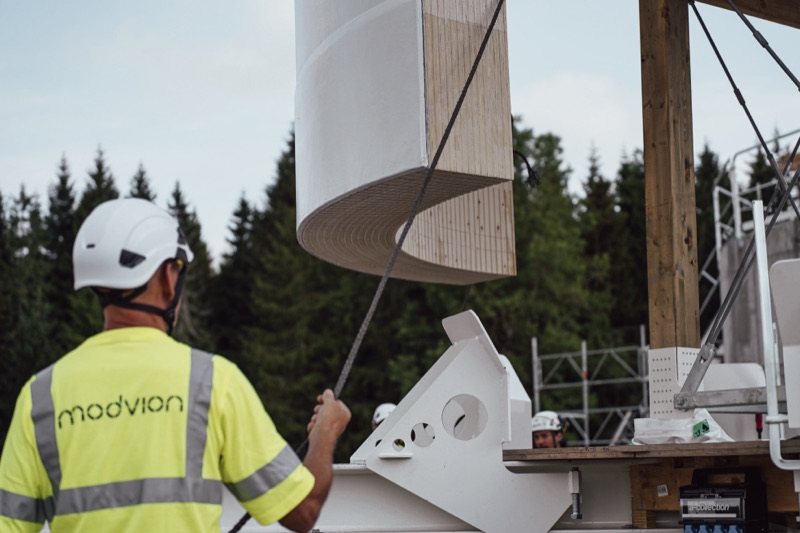
Reimagining wind energy
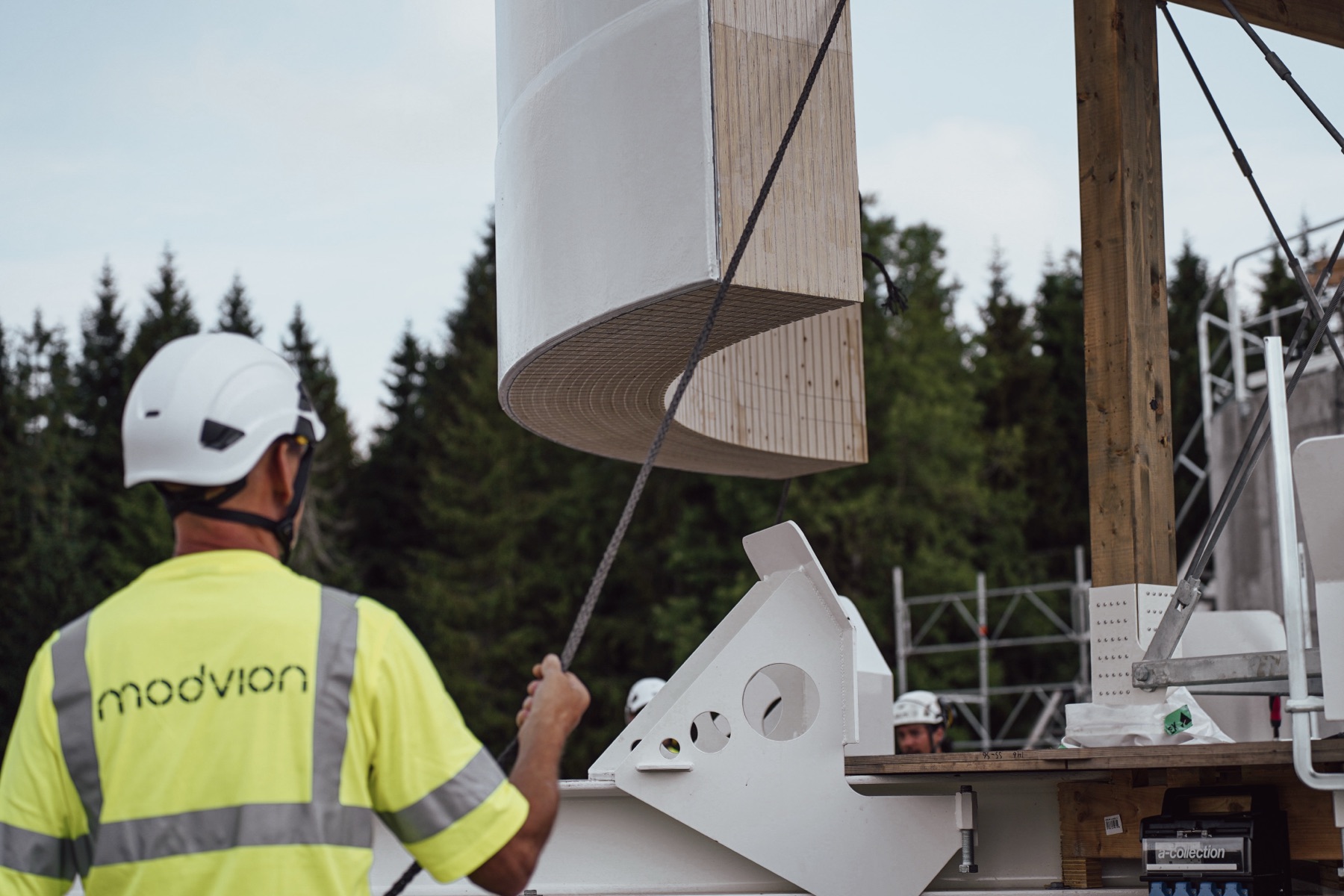
Modvion replaces steel turbine towers with modular laminated veneer lumber, enabling taller towers that store carbon rather than emitting it. Its 103-metre Wind of Change tower outside Skara supports a Vestas V90 turbine.19
Its 119-metre design for the 6.4MW Vestas Enventus platform has received a TÜV SÜD design evaluation conformity statement, with a 160 to 170-metre design targeted for 2027. Under the EU Innovation Fund, Modvion secured up to €39.1 million to build the world's first serial production facility for wooden towers at Trollhättan, expected to produce some 1,500 towers over ten years and avoid around 18 million tonnes of CO₂ equivalent.
Our mandate
Zaz Ventures has supported Modvion through successive stages of validation and industrialisation. We secured the EIC Accelerator (Pilot) Grant received in 2020 (€2.5 million), funding the Gothenburg development facility and first commercial installations, then EIC Accelerator (Pilot) Equity received in 2022 (€4 million) through the EIC Fund alongside Vestas Ventures. We then developed the winning Innovation Fund application, a €39.1 million project starting in 2027 that finances the Trollhättan factory and its automated machinery.
Energy & Cleantech
- Country
- Estonia
- Leadership
- CEO Taavi Madiberk
- Website
- SKELETONTECH.COM
Powering the AI boom
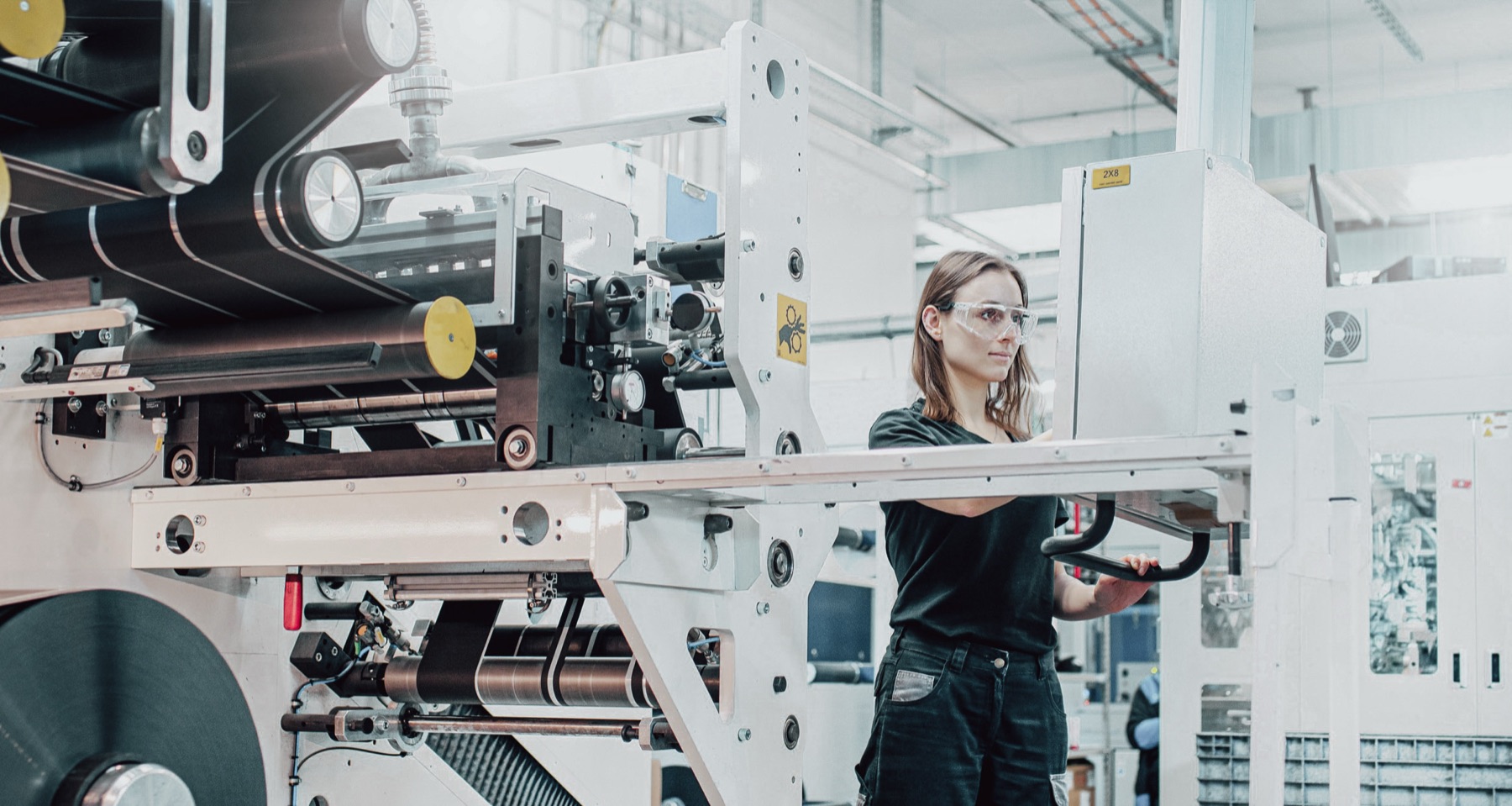
Skeleton builds high-power energy storage on its patented Curved Graphene material, using no lithium, cobalt or manganese. Its €220 million SuperFactory at Markranstädt near Leipzig opened in November 2025 with capacity for 12 million cells a year and 420 jobs.
The company supplies Siemens, General Electric and Hitachi Energy for European grids, and US hyperscalers for AI data centres, where its systems cut energy consumption by around 40% while increasing available compute. In October 2026, Skeleton became a unicorn, valued at more than $1 billion after an investment round led by Siemens, long one of its customers, ahead of a planned 2027 US listing.
Our mandate
Skeleton is the portfolio's longest engagement, spanning the arc from early commercialisation to industrial deployment. We secured an SME Instrument Grant in 2015 (€2.5 million), part of the Horizon 2020 support that commercialised the curved graphene still at the base of every product the company sells. Eleven years later we prepared the winning Innovation Fund application, a project started in 2026 (€79.2 million) for SB-VARKAUS, a first-of-a-kind battery plant at Varkaus, Finland, scaling SuperBattery production to industrial volume.
Energy & Cleantech
- Country
- Germany
- Leadership
- CEO Dr. Francesco Sciortino
- Website
- PROXIMAFUSION.COM
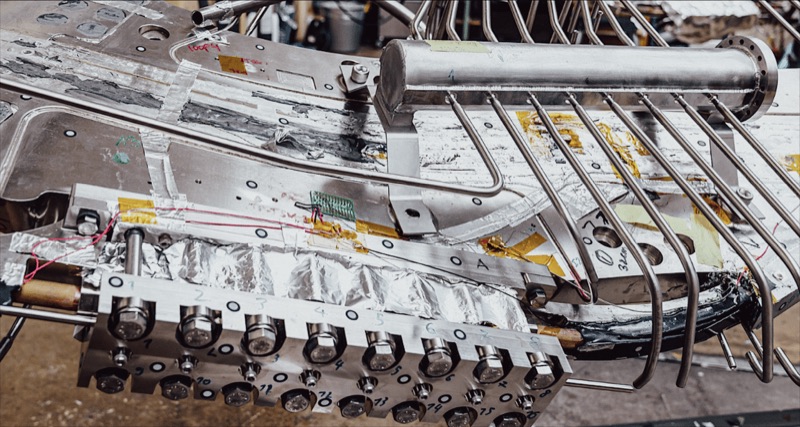
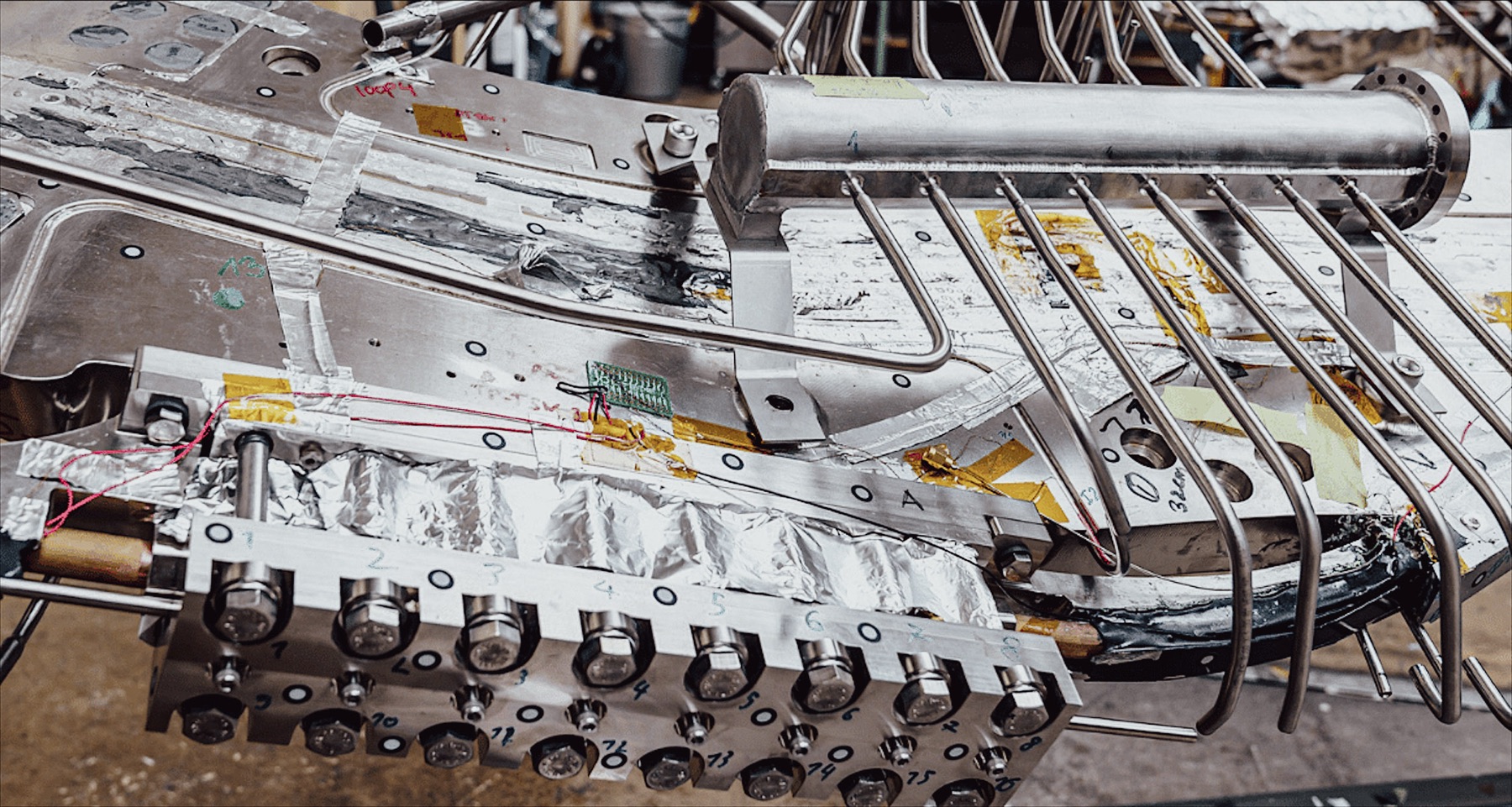
The stellarator's industrial edge
Proxima Fusion, the first spin-out from the Max Planck Institute for Plasma Physics, is commercialising magnetic confinement fusion using quasi-isodynamic stellarator configurations that eliminate the plasma disruptions inherent to tokamaks.
In July 2026 it closed a €411 million round at a €2.4 billion valuation, led by XTX Ventures and East X Ventures with RWE and Google as strategic investors and the EIC Fund returning, taking total capital past €650 million in under three years and making it Europe's best-funded fusion company. The round matched Bavaria's €400 million public commitment, announced four months earlier. Next milestones are the Stellarator Model Coil in 2027 and the Alpha net-energy demonstrator in 2031, ahead of the Stellaris plant at the former Gundremmingen nuclear site.
Our mandate
Zaz Ventures secured the public capital that de-risked Proxima's magnet technology before private markets would fund it at scale. We secured the EIC Accelerator Grant received in 2024 (€2.5 million) and the EIC Accelerator Equity received in 2026 (€15 million). This financed high-temperature superconducting magnet assemblies and the optimisation models underpinning the quasi-isodynamic configuration — the validation that anchored the €411 million round.
Space & Aerospace
- Country
- France
- Leadership
- CEO Thomas Hiriart
- Website
- ION-X.SPACE
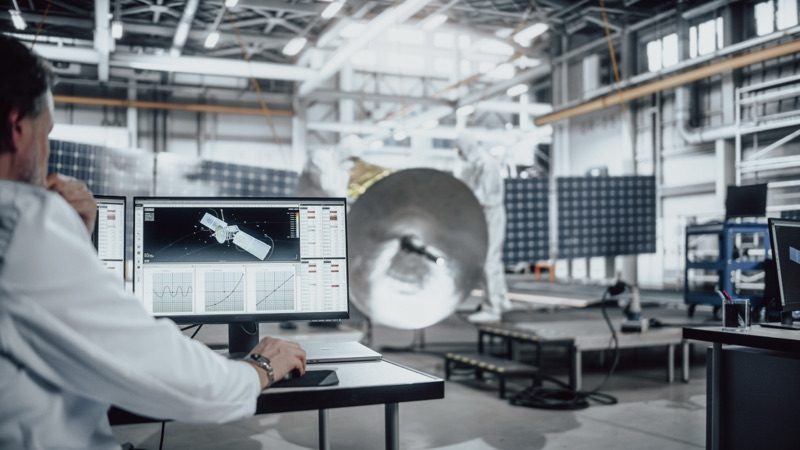
Revolutionising space mobility
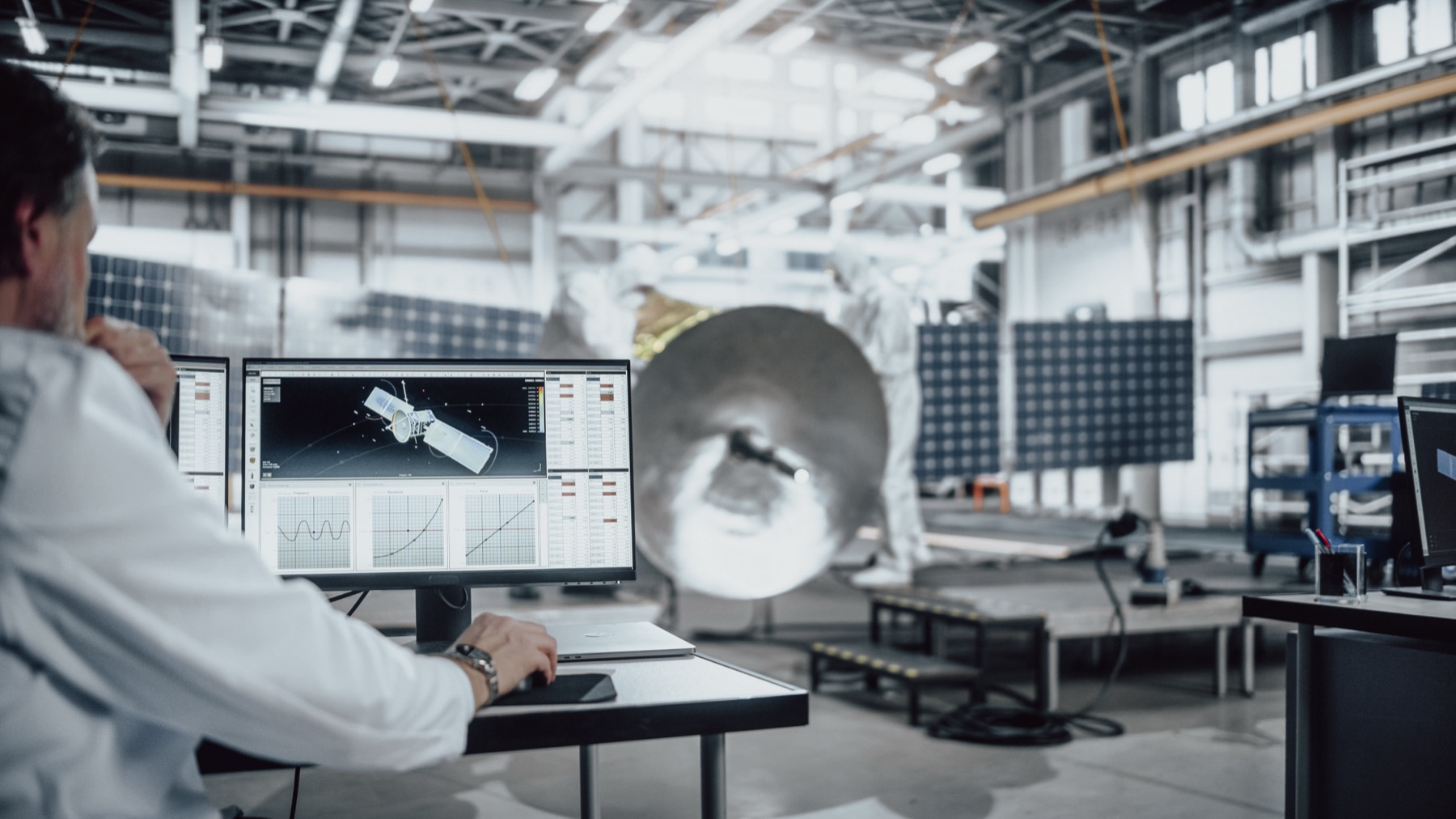
Ion-X builds ionic-liquid electrospray thrusters for small satellite manoeuvring, using a non-toxic, non-pressurised propellant that enables low-signature operation.
On 6 May 2025 it performed the first in-orbit firing of a European ionic-liquid electrospray system, aboard a Space Inventor spacecraft on the EDISON mission, only the second such demonstration worldwide and the first by a European company. It closed a €13 million Series A in December 2024 and is scaling toward 200 thrusters a year by 2028 from a facility in Île-de-France, with propellant and components sourced domestically.
Our mandate
Zaz Ventures secured the public capital that carried Ion-X from ground testing to flight heritage. We supported the EIC Accelerator Grant (€2.5 million) and EIC Accelerator Equity (€3.5 million), both received in 2024. This space-qualified the thruster, covered payload integration for the EDISON mission, and established pilot manufacturing, converting a CNRS laboratory technology into a flight-proven product within three years of incorporation.
Space & Aerospace
- Country
- Bulgaria
- Leadership
- CEO Svilen Rangelov
- Website
- DRONAMICS.COM
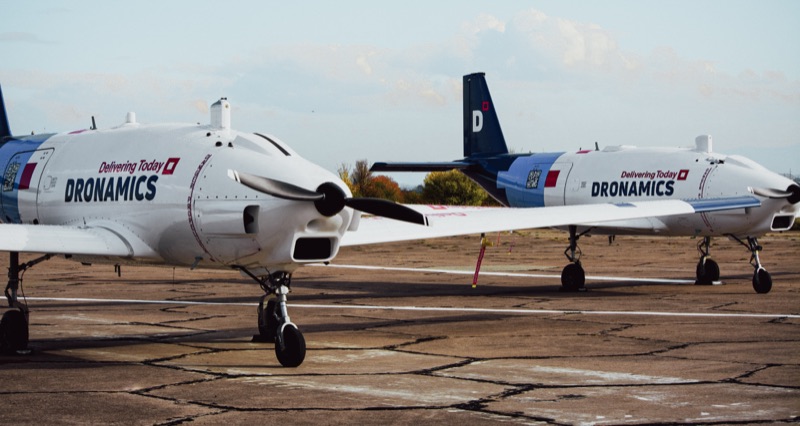
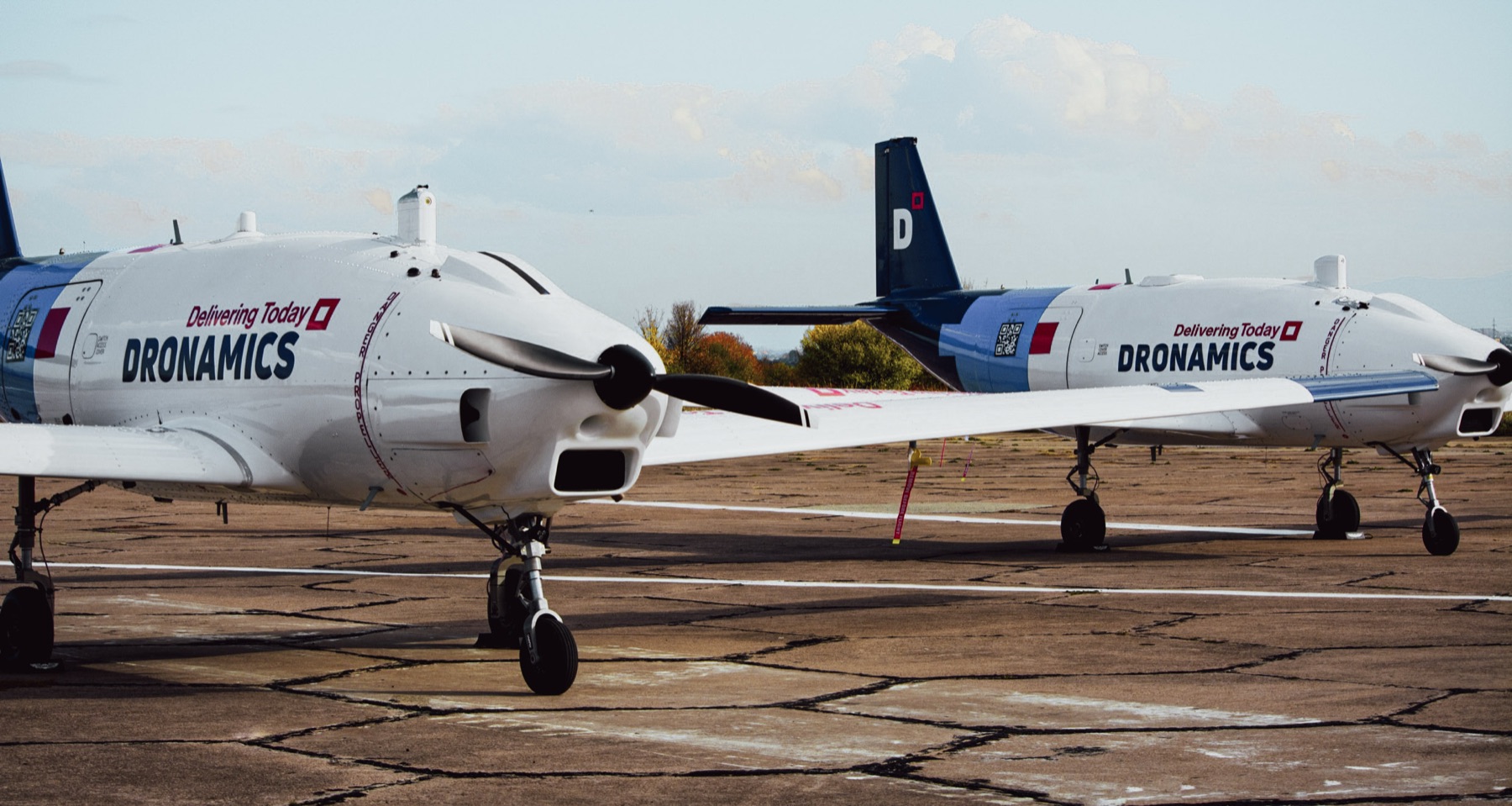
The cargo drone airline
Dronamics operates middle-mile autonomous cargo logistics with its Black Swan aircraft, carrying 350 kg over 2,500 km with 24-hour endurance, and holds Europe's first cargo drone airline licence.
The flight team completed 500 flights by November 2025, validating platform reliability ahead of commercial routes in Bulgaria and Greece and a planned network across 44 European airports. In February 2026 the company announced its first defence offering, fitting Black Swan with Hensoldt's PrecISR radar and MissionGrid software for detection of airborne, ground and maritime threats. In April 2026 it opened a Japanese subsidiary with Asia Air Survey as first Japanese investor. Dronamics was also selected under EIC STEP Scale-Up for up to €30 million in equity.
Our mandate
Zaz Ventures secured Dronamics' EIC blended package. We secured the EIC Accelerator Grant received in 2022 (€2.5 million), which funded aircraft engineering and flight test infrastructure, and the EIC Accelerator Equity received in 2024 (€10 million), which financed expansion of the flight test campaign through the 500-flight milestone and commercial route preparation across Europe.
Space & Aerospace
- Country
- Germany
- Leadership
- CEO Dr. Max Gulde
- Website
- CONSTELLR.COM
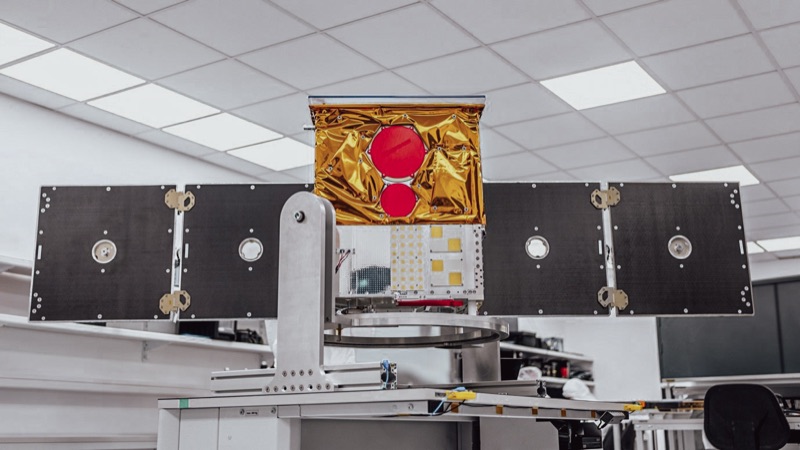
The thermometer of the Earth
Constellr operates high-precision thermal infrared satellites delivering land surface temperature at 2.0°C absolute accuracy and 0.1°C sensitivity, under a Constellation-as-a-Service model. Its first commercial satellites, SkyBee-1 and SkyBee-2, moved the company from R&D to active data delivery, and it holds ESA Copernicus Contributing Mission status.20
In February 2026 it raised €37 million in one of the largest Series A rounds in European space technology, led by Alpine Space Ventures with Lakestar, bringing total funding to €75 million. The capital advances the system to defence-grade status: constellr positions thermal intelligence as the missing third axis in Europe's sovereign ISR architecture, revealing not where assets are but how they are operating, alongside its established agricultural and urban heat applications.
Our mandate
Zaz Ventures structured Constellr's blended EIC financing across two receipts four years apart. We secured the EIC Accelerator Grant received in 2022 (€2.5 million), funding sensor calibration, satellite bus integration and the development leading to the SkyBee launches, and the EIC Accelerator Equity received in 2026, supporting constellation expansion, next-generation platforms at sub-5-metre resolution, and integration of sovereign ISR analytics following the €37 million Series A.

Health & Biotech
- Country
- Spain
- Leadership
- CEO Carolina Aguilar
- Website
- INBRAIN-NEUROELECTRONICS.COM
Decoding the brain
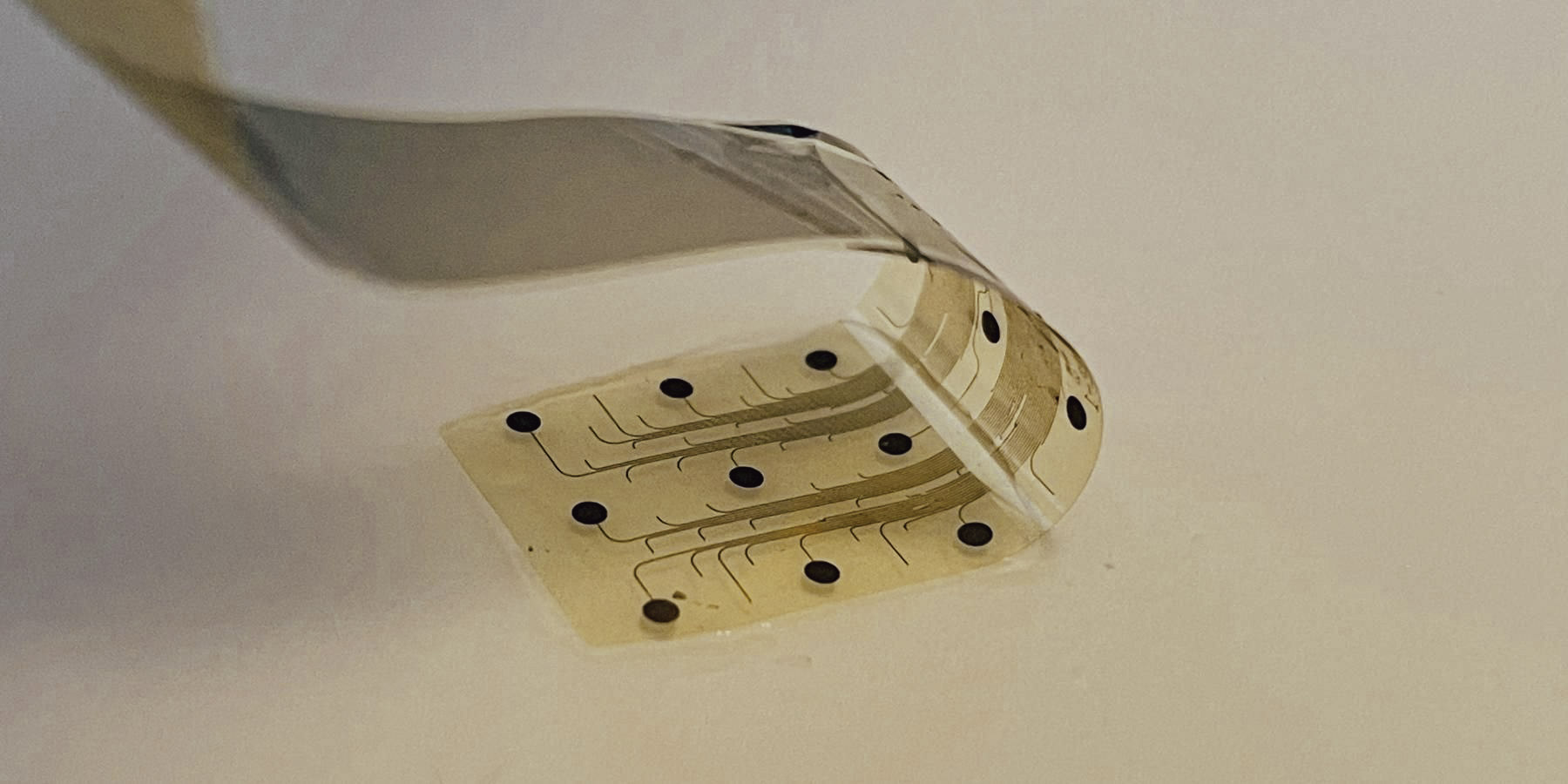
Inbrain builds neural interfaces from graphene electrodes ten micrometres thick, recording and stimulating brain activity at resolutions unattainable with metal or silicon. In September 2024 it performed the world's first human application of a graphene BCI, during brain tumour resection at Salford Royal Hospital in Manchester.21
Patient recruitment for the University of Manchester trial completed in April 2026, with ten patients enrolled and eight treated surgically. Interim data showed no device-related adverse events and demonstrated the resolution to distinguish healthy from cancerous tissue and to capture distinct high gamma activity linked to individual phonemes during awake language mapping.22 The company holds FDA Breakthrough Device Designation for Parkinson's, and works with Merck KGaA through its Innervia Bioelectronics subsidiary.
Our mandate
Zaz Ventures executed the portfolio's most complete EIC progression for Inbrain, moving the company through four funding instruments across the full maturity ladder. We secured the EIC Pathfinder Grant received in 2022, funding fundamental graphene interface research, an EIC Transition Grant received in 2024, which financed clinical-grade array fabrication and toxicology, and the EIC Accelerator Grant + Equity received in 2023-2024 (€17.5 million). Together this sequence carried the technology from physics to first-in-human surgery, a path few companies complete inside a single funding framework.
Health & Biotech
- Country
- Israel
- Leadership
- CEO Dr. Moshik Cohen-Kutner
- Website
- OMNIXMEDICAL.COM
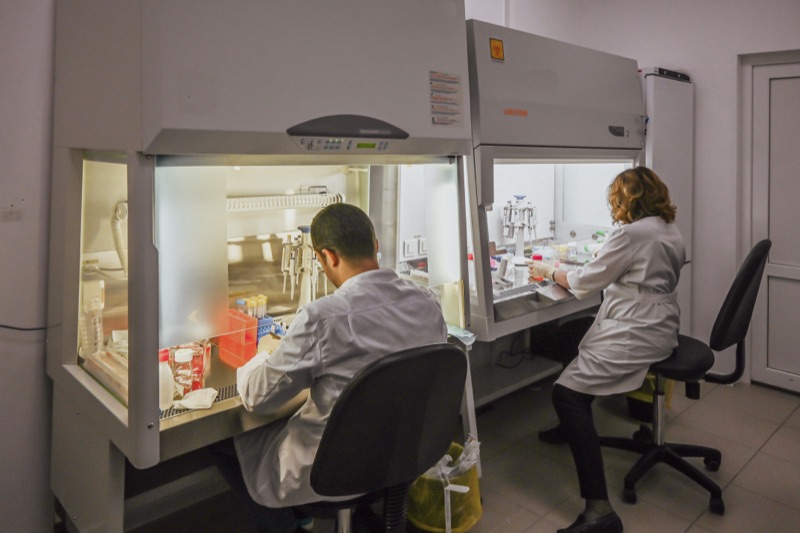
Nature's answer to superbugs
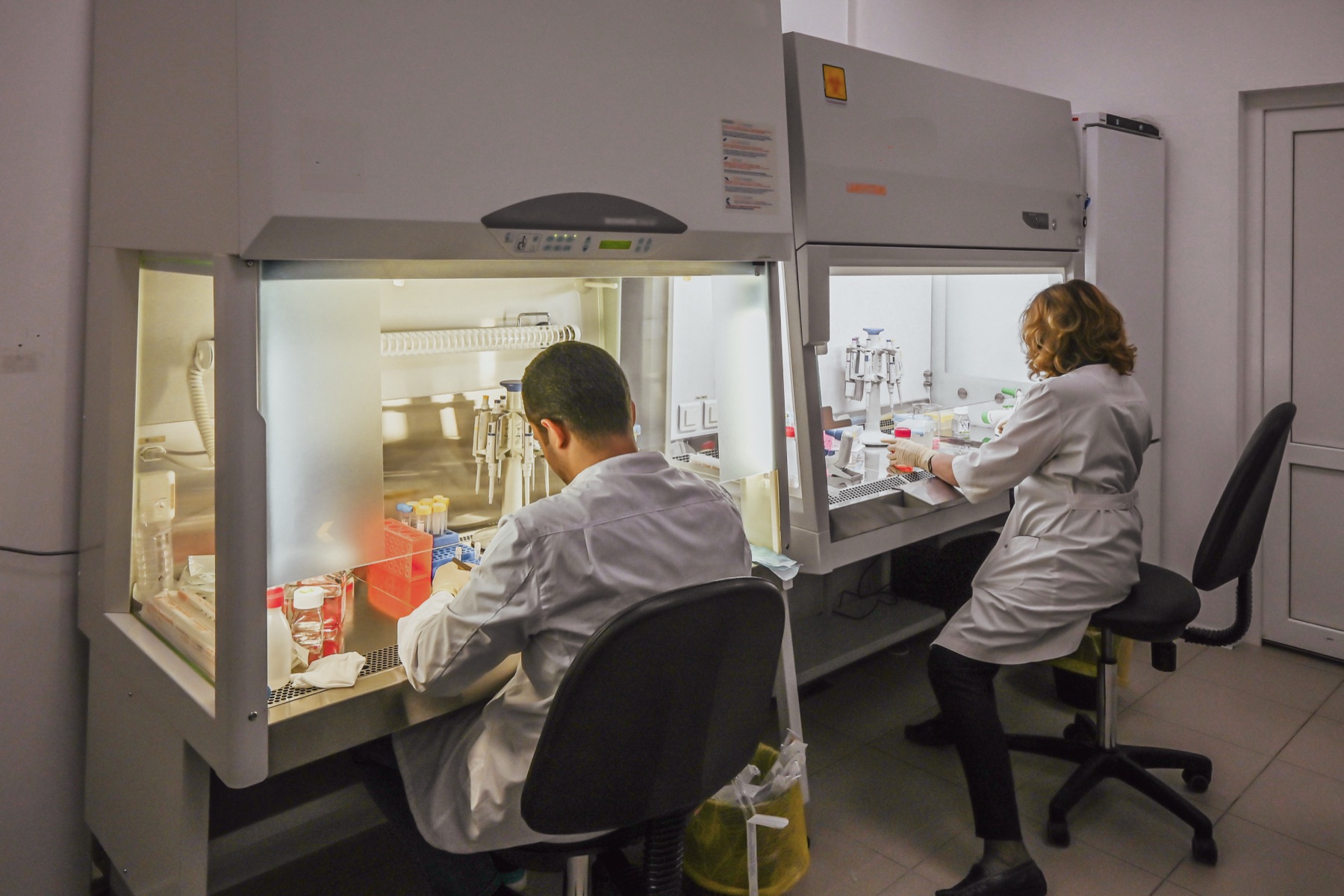
Omnix develops bio-engineered antimicrobial peptides derived from insect host defence molecules, destroying bacterial membranes on contact rather than interfering with metabolism, which makes resistance far harder to acquire.
On 3 June 2026 the company dosed its first patients in a Phase IIa trial of OMN6 across three Israeli medical centres, targeting hospital-acquired and ventilator-associated pneumonia caused by carbapenem-resistant Acinetobacter baumannii, a WHO critical-priority pathogen with mortality reaching 60%. This followed $25 million in Series C financing co-led by the EIC Fund and Harel Insurance & Finance.
Our mandate
Zaz Ventures supported Omnix across three instruments spanning six years of clinical development. We secured the EIC Accelerator (Pilot) Grant received in 2020 (€2.5 million), which funded IND-enabling safety studies, and the EIC Accelerator (Pilot) Equity received in 2025 (€4.8 million) via the EIC Fund. We also developed the Horizon Europe collaborative project PEPTAMR, starting in 2026 (€7.9 million) and coordinated by Omnix. This capital funded peptide synthesis scale-up and the execution of the Phase IIa trial that began dosing in June 2026.
Health & Biotech
- Country
- France
- Leadership
- CEO Bertrand Duplat
- Website
- ROBEAUTE.COM
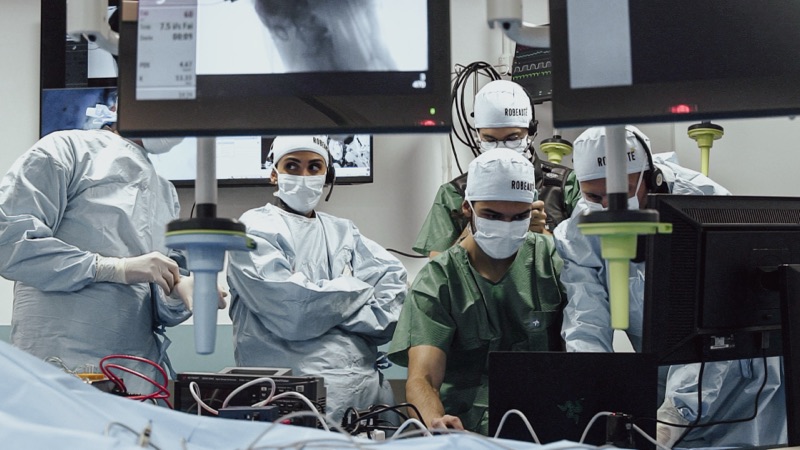
Navigating the human brain
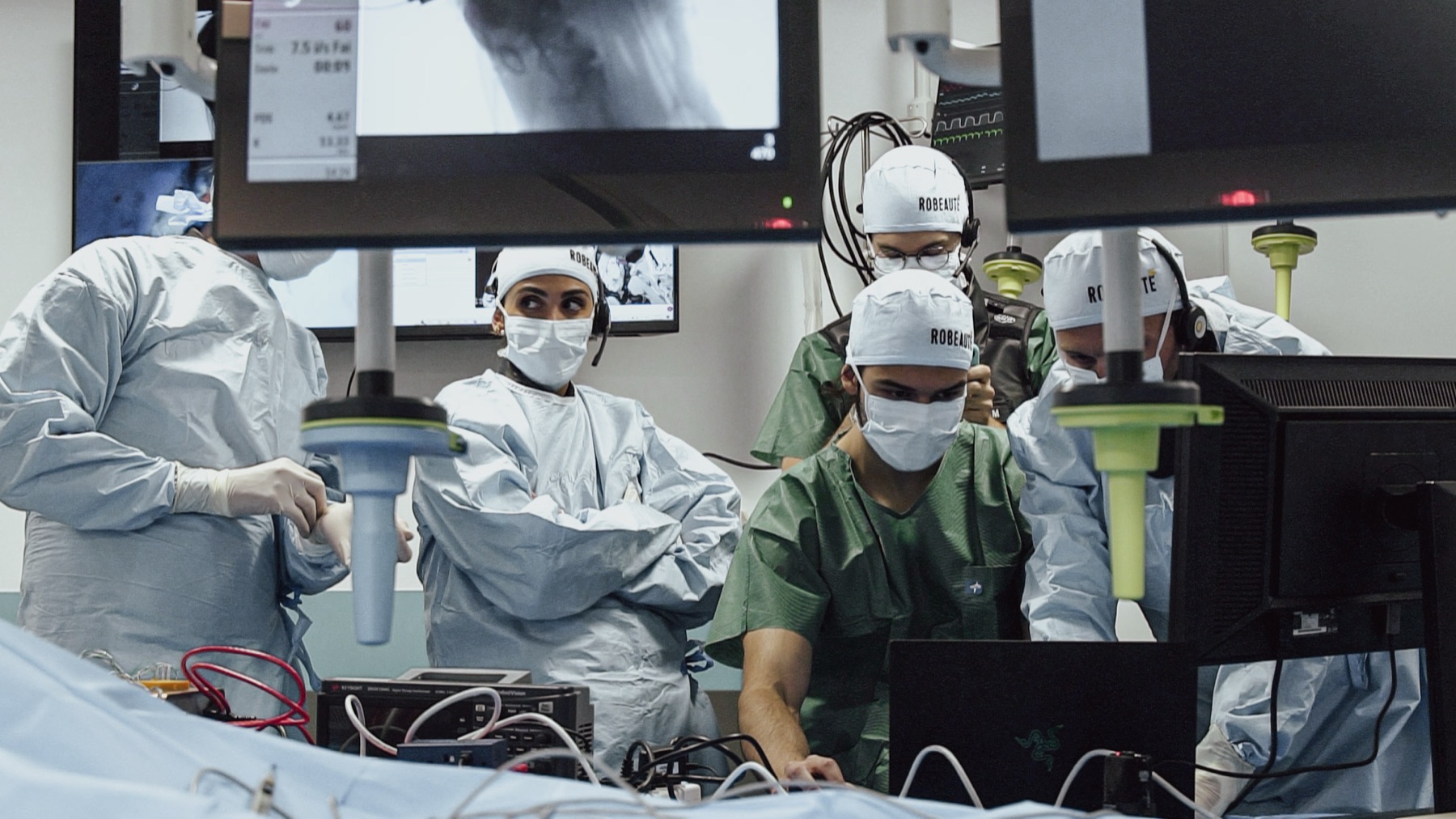
Robeauté builds autonomous microrobots, 1.8mm long and tracked continuously by ultrasound, that follow curved trajectories through brain tissue to reach sites inaccessible to straight-line neurosurgery.
The platform separates a standard carrier from mission-specific extensions, protected by more than 50 patents, with advanced biopsy as the first application and drug delivery and electrode implantation to follow. The company raised €27.2 million in January 2025 led by Plural, Cherry Ventures and Kindred Ventures, with strategic investment from Brainlab, and is targeting first-in-human studies by the end of 2026 while establishing US operations ahead of FDA submission.
Our mandate
Zaz Ventures secured Robeauté's first public capital at the transition from preclinical validation to human trials. We supported the EIC Accelerator Grant received in 2026 (€2.5 million), and are supporting the EIC Accelerator Equity scheduled for receipt in 2027 (€5 million). The grant funds micro-actuation mechanics, real-time ultrasound guidance software and the preclinical work preceding first-in-human procedures; the equity will fund clinical trial expansion and regulatory submission.
Works Cited
Sources
All sources accessed 6 August 2026.
Superscript numbers in the text refer to the entries below.
- 2026 European Deep Tech Report. Lakestar, Walden Catalyst & Dealroom, March 2026. Market figures converted from USD at the 2025 average rate of €1 = $1.13.
- Europe's deep-tech engine could spur $1 trillion in economic growth. McKinsey. mckinsey.com/capabilities/business-building/our-insights/europes-deep-tech-engine-could-spur-1-trillion-in-economic-growth
- Jurczak, C. (2026). Scaling Europe's frontier physical technologies: co-developing science and capital from lab to industry. Commentary.
- State of European Tech 2025: A roadmap to unlock further tech growth. Invest Europe. investeurope.eu/news/newsroom/state-of-european-tech-2025-a-roadmap-to-unlock-further-tech-growth/
- European tech's confidence crisis is its biggest challenge. Atomico. atomico.com/insights/european-techs-confidence-crisis-is-its-biggest-challenge
- Communication: A Competitiveness Compass for the EU, COM(2025) 30. European Commission, 29 January 2025.
- Communication: Choose Europe to Start and Scale — an EU Startup and Scaleup Strategy, COM(2025) 270. European Commission, 28 May 2025.
- Defence Readiness Omnibus. European Commission, 17 June 2025; Council general approach, 26 November 2025.
- Communication: A Quantum Europe Strategy, COM(2025) 363. European Commission, 2 July 2025.
- Choose Europe for Life Sciences. European Commission, 2 July 2025.
- Multiannual Financial Framework 2028–2034 proposals, including Horizon Europe and the European Competitiveness Fund. European Commission, 16 July 2025.
- EIC Impact Report 2026. European Innovation Council.
- IQM Quantum Computers reaches production milestone of 30 quantum computers. IQM. iqm.tech/press-releases/iqm-quantum-computers-reaches-production-milestone-of-30-quantum-computers/
- Aramco and Pasqal make history with Saudi Arabia's first quantum computer. Pasqal. pasqal.com/newsroom/aramco-and-pasqal-make-history-with-saudi-arabia-first-quantum-computer/
- Pasqal Releases 2025 Roadmap Showcasing Upgradable Platform from Today's Quantum Solutions to Tomorrow's Fault-Tolerant Systems. Pasqal. pasqal.com/newsroom/pasqal-releases-2025-roadmap/
- Newsroom. Quandela. quandela.com/about-us/newsroom/
- Quandela announces a 100,000-fold reduction in the number of components needed for fault-tolerant calculations. Quandela. quandela.com/about-us/newsroom/
- Quandela delivers Lucy, the most advanced photonic quantum computer worldwide, to EuroHPC and GENCI at CEA's TGCC. Quandela. quandela.com/about-us/newsroom/
- World's Largest Wooden Wind Turbine Tower was Officially Inaugurated. Modvion. modvion.com/news/worlds-largest-wooden-wind-turbine-tower-was-officially-inaugurated/
- constellr Launches Second Satellite, Strengthening Europe's Sovereign Thermal Intelligence Capabilities. constellr. constellr.com/article/constellr-launches-second-satellite
- INBRAIN Neuroelectronics Announces World's First Human Graphene-Based Brain Computer Interface Procedure. Business Wire via Ritzau. via.ritzau.dk/pressemeddelelse/14058325/
- INBRAIN Neuroelectronics Reports Interim Analysis of First-in-Human Study of Graphene Brain-Computer Interface. BioSpace. biospace.com/press-releases/inbrain-neuroelectronics-reports-interim-analysis